Moving Backwards YouTube

The game is played in a similar fashion to English Draughts but the pieces move and capture in an extended fashion. Crowned pieces are called Queens. The following are the additional rules: Un-crowned pieces can only move diagonally forwards but can capture diagonally forwards AND backwards.
Pin on Infographics

You can capture forwards as well as backwards. Capturing is mandatory. The player should also choose the most numerous capture sequence i.e. the one thanks to which he would capture as many opponent's pieces as possible.. (similarly to the Russian draughts). A king can move any number of squares, horizontally or vertically (following the.
If you are not moving forward, you are moving backwards Inspirational quotes, Lifestyle quotes

Basic Rules of Draughts DRAUGHTS BOARD AND MEN.. An ordinary move of a king (crowned man) is from one square diagonally forward or backward, left or right, to an immediately neighbouring vacant square.. (This usually occurs when neither player can force a win) 40- Move Rule. The game shall be declared drawn if, at any stage of the game, a.
Can you spell Stun Seeds backwards? YouTube

1. In several computer versions of the game (as well as how i learned to play in real life), you are allowed to jump backwards if and only if the piece is a king at the time of jumping. In particular, if the piece begins as a non-king, makes a jump and is promoted, it may make a second jump backwards if eligible. - JMoravitz.
Draughts vs Solitaire When And How Can You Use Each One?

Checkers, also known as draughts, is a fun and easy game that dates back to the 12th century. To win a game of checkers, your goal is to capture or block your opponent's pieces so that they can no longer make a move. You can move faster by jumping your opponent's pieces and removing them from the board.
Checkers PNG

The objective of the game is to move your pieces around the draughts board so that they all end up on your opponent's side while also jumping any pieces you can in the process. A piece can move in any direction over empty squares towards the opponents' pieces. To capture an opponents' piece, you must jump over it with your own draught piece.
Sam Waterston Quote “If you’re not moving forward, you’re falling back.”
Draughts is played on an 8 x 8 board, with each player having 12 pieces. Each piece can only move forwards diagonally. Although if a piece gets to the end of the board, it will be crowned and become a King, which means it can move forward and backward. The goal of Draughts is to capture your opponent's pieces.
Pin on Quotes

General rules. Draughts (or checkers) is played by two players, on opposite sides of a playing board, alternating moves. One player has dark pieces, and the other has light pieces. It is against the rules for one player to move the other player's pieces. The player with the light pieces makes the first move unless stated otherwise.
Why You Should Start Walking/Running Backwards? Benefits Of Backward Running YouTube

Regular checkers ("men") may only move forward one square diagonally (Figure 2), and may likewise only capture ("jump") forward. Figure 2: Moving a single piece. Figure 3: A single jump. Figure 4: A multiple jump. As shown in the figures above (taken from Jim Loy's Checkers Pages ), a legal jump is only possible when the square immediately.
How To Drive BackwardsLesson For Beginners YouTube

Checkers (American English), also known as draughts (/ d r ɑː f t s, d r æ f t s /; British English), is a group of strategy board games for two players which involve forward movements of uniform game pieces and mandatory captures by jumping over opponent pieces. Checkers is developed from alquerque. The term "checkers" derives from the checkered board which the game is played on, whereas.
Draughts or Checkers in the 1700 and 1800s Geri Walton

The king has the added ability to move any amount of squares at a time in international draughts and can also move backward. Kings can also capture backwards, although in some variants men can also do this. Kings can make successive jumps in a single turn, as long as each jump captures an enemy piece.
Pin on Inspirational Quotes

Obligation to move A player has to move, a player who can no longer move loses. Moving pieces All pieces and kings can move only diagonally. Pieces and kings can only move to adjacent free black squares except when making a jump (see below). Normal pieces may only move and jump forwards. Kings may move and jump forwards as well as backwards.
Can You Go, Jump or Move Backwards in Checkers? Holding the Cards
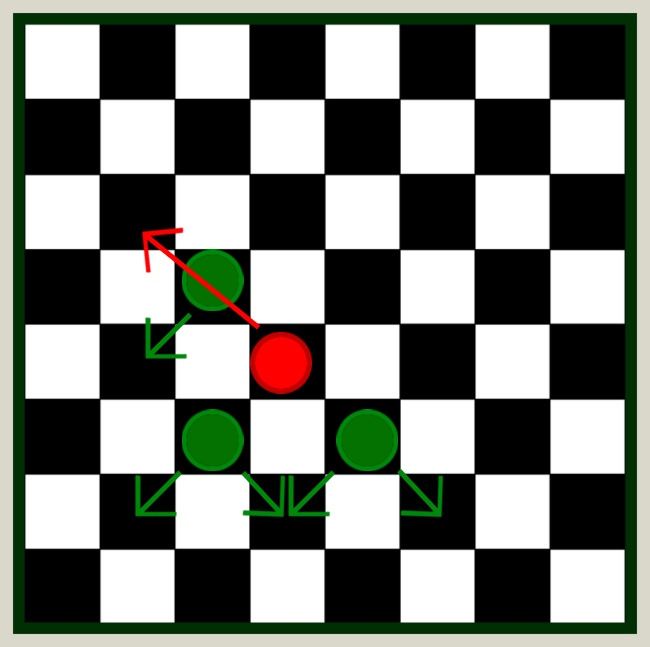
This holds for any variant of draughts/checkers. The privileges that a king obtains differ by variant, however. backward movement: in all variants, kings can move backward, but men cannot. backward capture: in all variants, kings can jump backward, but men cannot for American/English checkers/draughts, Italian, Spanish, Czech and Thai draughts.
The Story of Draughts All about Draughts Origin of Draughts
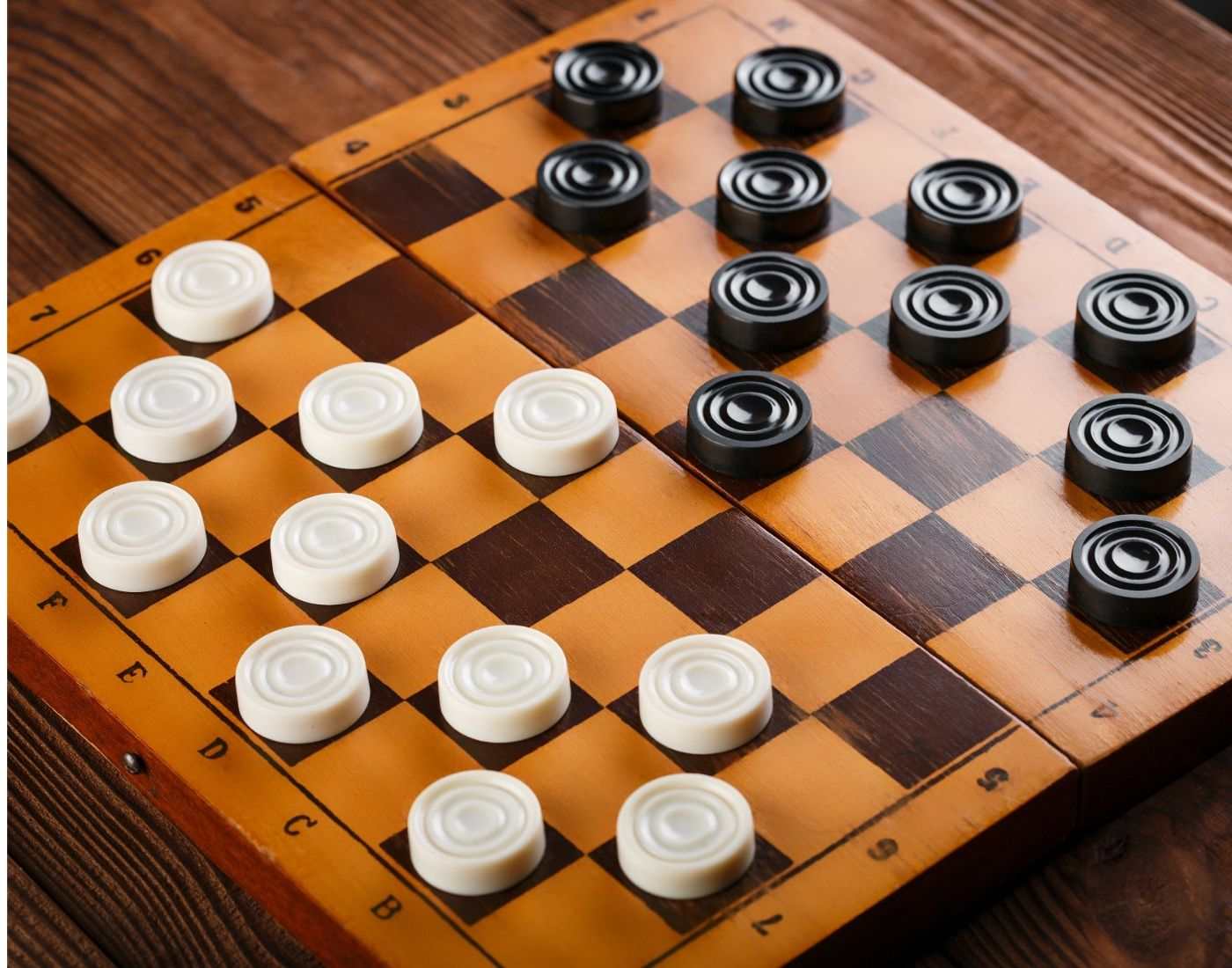
Checkers is one of the oldest known board games that is still played today. Also called draughts in Blighty, the origins of the game can be traced back thousands of years to ancient Mesopotamia. While the playing field looks similar, checkers is a much faster game with less rules to remember and easier to get into - but still requires thought and planning. If you're thinking of starting your.
Backwards Draughts! YouTube

The first move belongs to the player using white pieces. Players take turns every single move and the player is permitted to move only his own pieces. In general, pieces can be moved diagonally, forward and be placed on the empty field in the next row. Still, there are exceptions to this rule, e.g. Turkish draughts.
Double Jumps the key to checkers tactics YouTube
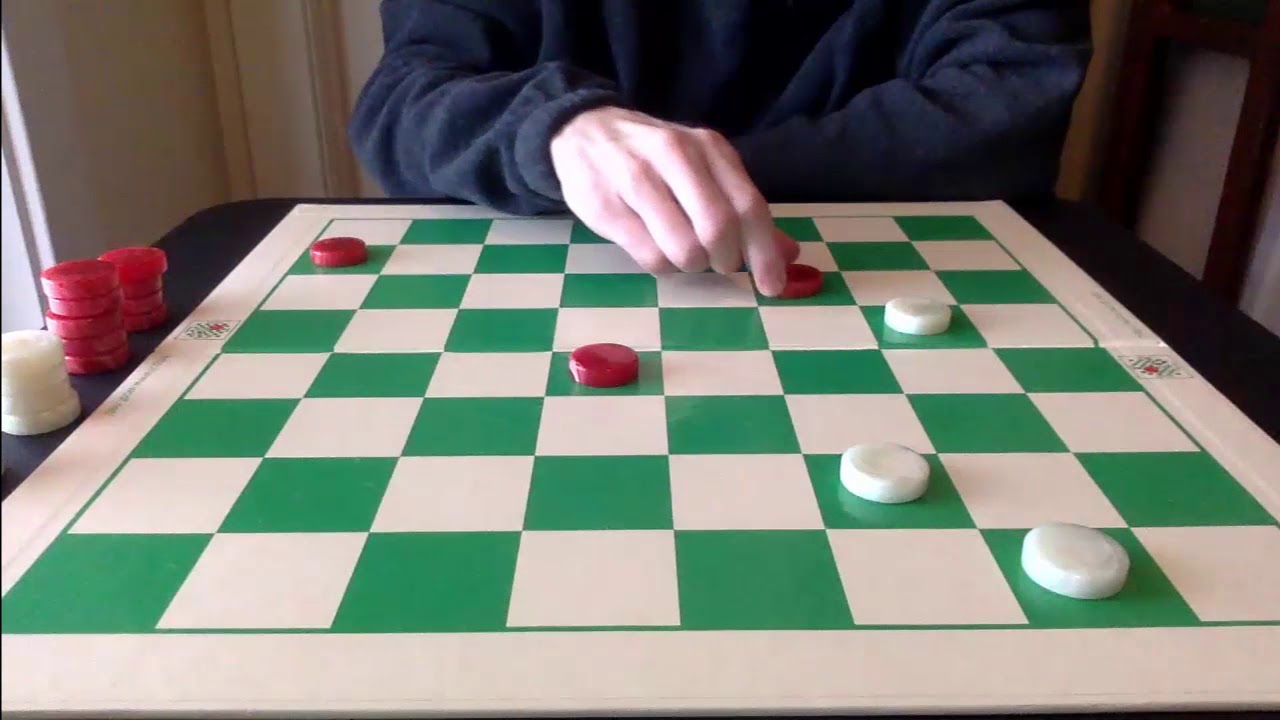
English draughts (British English) or checkers (American English), also called straight checkers or simply draughts, is a form of the strategy board game checkers (or draughts). It is played on an 8×8 checkerboard with 12 pieces per side. The pieces move and capture diagonally forward, until they reach the opposite end of the board, when they are crowned and can thereafter move and capture.